


10 August 2026
Veronika Lišková and Petr Hátle: Crossing the nonfiction divide
Veronika Lišková and Petr Hátle: Crossing the nonfiction divide

Veronika Lišková and Petr Hátle both made the move from documentary filmmaking into fiction, hybrid forms, and premium television. Their work—examining how private lives are shaped by systems of power, favoring ethical complexity over simple moral judgments—reflects a broader movement in Czech cinema, as documentary sensibilities migrate into psychologically driven fiction and ambitious small-screen production.
by Martin Kudláč for CZECH FILM / Fall 2026
Veronika Lišková: Individual lives under institutional pressure
Moving between documentary, fiction, hybrid film, and TV, Veronika Lišková inquires into how private identities are formed under the pressure of social roles, intimate relationships, and institutional systems. Her psychologically precise, ethically attentive storytelling shifts fluidly between observation and dramatic framing to expose the broader structures embedded in individual experience.
A graduate of cultural studies at Charles University and screenwriting and dramaturgy at Prague’s FAMU, Lišková has worked extensively in the documentary industry. She led both the Ex Oriente Film training program and the East Doc Forum, served as curator and acquisitions manager for DAFilms, and now combines directing with creative producing for TV Nova and Oneplay.
She established the approach described above right out of the gate, in her feature debut, Daniel’s World (2014), a documentary about a literature student who identifies as a pedophile but has never sexually abused a child. Neither demonizing him nor asking for uncomplicated sympathy, Lišková instead straightforwardly observes his attempt to live responsibly with desires he cannot act upon. The film received the audience award at Ji.hlava before premiering internationally in Berlinale Panorama in 2015.
In The Visitors (2022), Lišková expanded her view from the individual to a community. The Czech-Norwegian-Slovak documentary follows anthropologist Zdenka Sokolíčková and her family in Longyearbyen, Svalbard, where the instability of the environment is mirrored in the population’s conditional belonging: residents possess limited political rights and may be required to leave when they cease to be economically productive. As the researcher becomes increasingly attached to the town, the boundary between observer and participant dissolves. The film premiered in Locarno’s Semaine de la Critique and screened at more than 40 festivals.
Next, Lišková moved into fiction with Year of the Widow (2024), adapted from journalist Zuzana Pokorná’s account of the year following her husband’s sudden death. Playing out over four seasons, the film treats bereavement as both emotional rupture and practical reorganization, encompassing funeral arrangements, inheritance, financial insecurity, and family pressure. The Czech-Slovak-Croatian coproduction premiered in the Warsaw Film Festival’s 1-2 Competition. Pavla Beretová received the Czech Film Critics’ Award and a Czech Lion for Best Actress, while Eugen Liška won the critics’ screenplay prize.
Her most advanced project at the moment is My Other, Perfect Me, a Czech-Slovak-Lithuanian hybrid feature currently in production. The story follows actress and singer Tereza Marečková as she revisits a period marked by bulimia. Marečková’s profession allows Lišková to operate in the space between testimony and performance: rather than simply reproduce the singer’s memories, the reconstructed passages extend them into broader situations associated with eating disorders. The film represents Lišková’s most extensive blurring of nonfiction and fiction to date. Completion is planned for 2026, followed by a 2027 festival launch. Producers Kristýna Michálek Květová and Martina Netíková of Cinémotif Films continue their collaboration with Lišková after The Visitors and Year of the Widow.
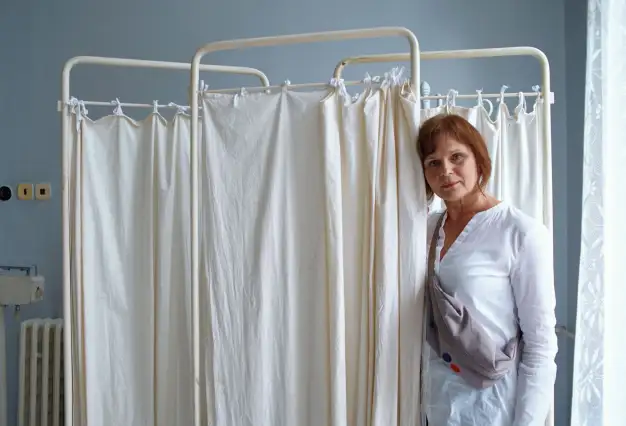
The director is also developing Edges of the Abyss, a fiction feature written together with Eugen Liška. Loosely inspired by Poland’s Budzik clinic for comatose children, the psychological drama is set in a hospital where parents, doctors, and caregivers organize their lives around unconscious children. Medical routines impose a fixed rhythm on the adults, whose own emotional paralysis surfaces only gradually in an environment defined by prolonged uncertainty. The screenplay follows three central characters, with emphasis on a young female doctor, and is currently at an early development stage.
In addition to directing, Lišková also serves as creative producer on a scripted series with the working title Major Hofmanova, developed for Oneplay with producer Dagmar Sedláčková, director Petr Hátle, and screenwriters Kristina Májová and Jan Smutný. The series is in production development, and principal shooting is planned for the first half of 2027.
Petr Hátle: Intimacy at the edge of rupture
Director Petr Hátle studied film history and philosophy at Charles University before graduating from FAMU’s Documentary Film Department. His creative work, ranging from documentary to psychological fiction to true crime and reality TV, is united by a fascination with human behavior under pressure, examining how intimacy, authority, and self-presentation become unstable in relationships, institutions, and media narratives. His formally controlled yet increasingly stylized approach stands out in a body of work attentive to moral ambiguity, social neglect, and the often imperceptible point at which dependency morphs into manipulation or violence.
Hátle’s feature documentary debut, The Great Night (2013), which grew out of his earlier short Advent, established his attraction to spaces that operate outside of conventional social rhythms. Moving through Prague’s bars, gambling rooms, and peripheral meeting places, the film constructs a parallel nocturnal city of artificial light and enclosed interiors. It won best Czech documentary at Ji.hlava and the documentary competition at Finále Plzeň before screening internationally at CPH:DOX. Subsequently, Hátle contributed a segment to Gottland (2014), continuing his practice of reframing documentary material through stylization.
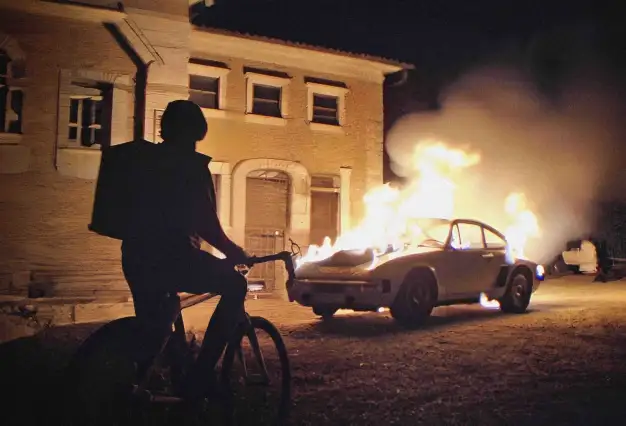
His fiction feature debut, Mr. and Mrs. Stodola (2023), drew on the real case of Jaroslav and Dana Stodola, a married couple convicted of murdering elderly people. Hátle structured the film less as a procedural than as a destructive love story in which violence becomes a shared activity binding the couple together. Stripped of the charisma often attached to serial killers, the Stodolas inhabit a socially impoverished landscape, in which they prey on victims neglected by the surrounding community.
For his next project, Hátle returned to nonfiction, with The Kramný Case (2024), a five-part series about Petr Kramný, convicted of killing his wife and daughter during a family vacation in Egypt. Combining testimony from relatives, lawyers, and experts with a prison interview of Kramný, the series examines both the case and its transformation into a national media spectacle. Its subject is not only guilt or innocence, but the way a highly visible suspect becomes inseparable from the public narrative constructed around him.
Currently, Hátle is at work on Major Hofmanova, based on the story of Jiřina Hofmanová, a former chemistry teacher who entered the police force in her forties and became an highly regarded homicide investigator—an outsider, as a woman in a male-dominated institution, who developed her own investigative methods based on behavioral analysis and close observation. Initially conceived as a documentary series, the project was recast as fiction and is now moving toward production. Rather than reproducing the familiar realist iconography of Czech 1990s crime dramas, Hátle and cinematographer David Hofmann have chosen to develop a subjective visual language shaped by the memories of a generation that experienced the decade as children or young adults. At the same time, the story remains grounded in extensive research and testimony from people directly involved in police work.
Hátle is also currently writing Alpha, a fiction feature produced by Tomáš Hrubý of nutprodukce. Loosely inspired by corruption scandals in Czech healthcare, it follows a middle-aged physician who joins a secretive men’s club founded on the pillars of “alpha male” rhetoric, pseudoscientific theories of brain chemistry, and resentment of feminism and wellness culture. Rather than investigating corruption, the film looks at how ageing men deal with lost opportunities, declining authority, and the inevitability of death. Formally, Alpha marks a decisive break from the realism of Hátle’s previous works. The main character addresses the camera, rationalizing his actions in a voice shaped by cynicism and existential pain. Conceived as a wild, accelerating ride, the film gradually abandons naturalism as the doctor’s pursuit of power and attempts at self-reinvention turn increasingly destructive.
In addition to his own projects, Hátle also works in reality TV—most recently on the Czech edition of Asia Express. He has said he regards the format as an extension of his documentary practice: carefully designed constraints create the conditions in which relationships, and behavior can unfold directly before the camera.
Related news

Related people

Petr Hátle
Director, Writer, Story