13 January 2025
Backwoods: Dysfunctional family and apocalypse in the Czech wilderness
Backwoods: Dysfunctional family and apocalypse in the Czech wilderness

Czech film editor Evženie Brabcová pivots to directing in her feature-length debut, Backwoods, about a dysfunctional family coping with dramatic environmental change. Unlike a typical drama about toxic relationships, Backwoods tackles its subject through a more surreal lens, incorporating fairy-tale elements into a story of mortality, forgiveness, and hope amid chaos.
by Martin Kudláč for CZECH FILM / Spring 2025
Previously, Brabcová has been known chiefly for her editing work on the acclaimed documentaries Gottland (2014), FC Roma (2016), and Is There Any Place for Me, Please? (2023), as well as Michaela Pavlátová’s animated film My Sunny Maad (2021). Her other significant credits as a film editor include Krystyna Krauze’s Return of Agnieszka H. (2013), a documentary about Agnieszka Holland, and Benjamin Tuček’s documentary The Plan (2014).
However, Brabcová is no stranger to directing, having helmed the student films Mr. Mireček (2010) and The Weekend House (2012), and codirected a behind-the-scenes feature about Jan Švankmajer’s Surviving Life (Theory and Practice) (2010). Cowritten with Aneta Sláma Honzková, the script for Backwoods received the Film Foundation’s award for best domestic unrealized screenplay in 2020.
Family at the end of the world
Backwoods is a family drama delving into the themes of reconciliation and forgiveness, set against the backdrop of environmental upheaval. The narrative centers on the complex relationship between an aging recluse named Bogdan (aka “Old Man”), and his adult daughter, Marta. Seeking refuge from her abusive partner, Marta arrives at her father’s rural home with her daughters, Agáta and Mína, only to find him preoccupied with preparations for the impending apocalypse. Their interactions, strained by past grievances, serve as a catalyst for Marta’s transformation.
The setting—a secluded house surrounded by woods teeming with wild boars—mirrors the characters’ internal turmoil. The recurring motif of the animals illustrates the disruption of the natural balance and evokes broader anxieties about environmental degradation.
As Marta’s father perceives the world’s environmental decline as his personal apocalypse, leading him to retreat into isolation and doomsday prepping, the film explores how family conflicts reflect and influence human relationships with the environment. Drawing inspiration from the director’s personal experiences, particularly her father’s solitary life near the forests of the Brdy hills, Backwoods offers a portrayal of generational conflicts and the quest for stability in the midst of change.
The development of this film coincided with the passing of the director’s father and the birth of her own children, prompting her to reflect on the future and the nature of parent-child relationships. These experiences deepened the portrayal of the characters in Backwoods, which Brabcová describes as a film about “impermanence, forgiveness, and hope.”
Surreal social drama
The film employs a visual style that melds natural realism with fairy-tale elements. Cinematographer David Hofmann, who lensed Jan Prušinovský’s road comedy Grand Prix (2022) and Adam Martinec’s debut, Our Lovely Pig Slaughter (2024), takes a documentary-style approach, using a handheld camera and wide-angle lenses and shooting in 1.85:1 aspect ratio to infuse immediacy into the film’s intimate scenes. Surreal elements, such as the enigmatic presence of wild boars captured through trap camera footage, impart a haunting, otherworldly quality to the film. “We worked extensively with natural light. What makes David’s style unique is his intuitive approach to mise-en-scène, his dynamic handheld camera work, his sensitivity to the actors’ performances, and his masterful use of natural light. He also demonstrates remarkable inventiveness in his approach to color grading. Our focus was on staying close to the characters, capturing their relationships and emotional states with authenticity,” Brabcová said.
One notable innovation, as noted above, was the use of trap cameras to capture the movements of wildlife. Producer Jakub Rálek of BFILM.cz explains: “We set up five hidden cameras throughout the forest to film wild boars in their natural habitat. These images will be interwoven with the story, creating a visual language that blurs the line between the human and animal worlds.” Filming on location in the Brdy forests presented several challenges, particularly when working with live animals. A domesticated wild boar, specially trained for the production, served as a standout “performer” in the film.
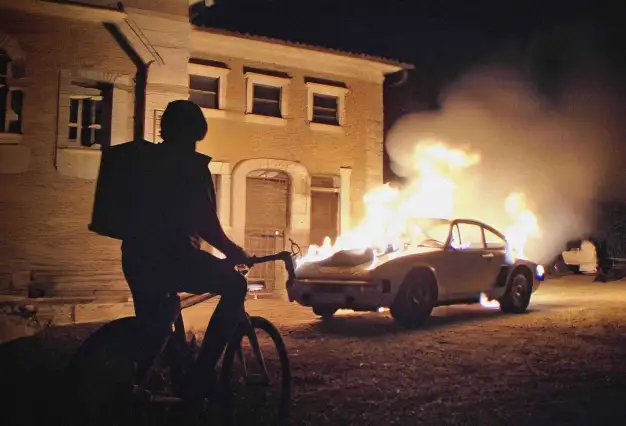
Nature in Backwoods is depicted as a magical realm. To evoke a sense of timelessness and ambiguity regarding the impending apocalypse, the director strategically utilizes transitional times of day. This choice, combined with the subtle instability of its handheld camera work and unsettling visual elements, creates a dreamlike, almost fairy-tale, atmosphere. All of this sets Backwoods apart from the usual fare of dramas about toxic family relationships.
Survival amid chaos
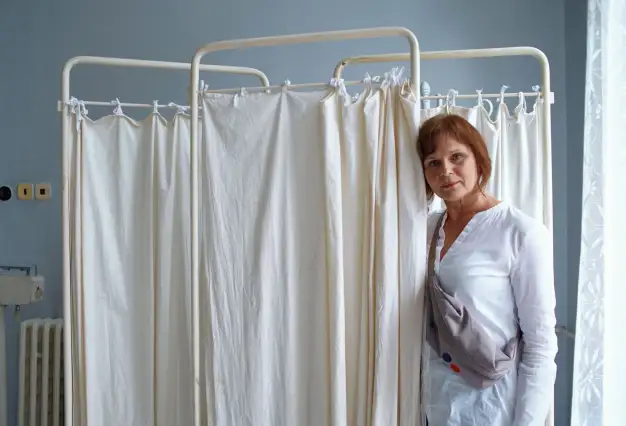
Dysfunctional relationships sit at the center of Backwoods. The strained dynamic between Marta—portrayed by Klára Issová (The Prague Orgy, 2019)—and her father, Bogdan—depicted by veteran actor Jan Vlasák, who most recently starred in the Czech sci-fi drama Restore Point (2023)—underscores broader generational divides. As Brabcová notes, Bogdan embodies the universal struggle against the inevitability of life’s end, a theme both tragic and comical, while his survivalist mindset contrasts with Marta’s pursuit of emotional healing in the wake of domestic abuse.
Marta’s personal crisis, marked by the breakup of her family, is depicted as part of a broader journey, as her time at home reveals that her partner, Milan—played by Slovak actor Juraj Loj of Agnieszka Holland’s Charlatan (2020)—has been a catalyst for unresolved issues with her father. Jan František Uher, who won a Czech Lion for Best Supporting Actor for his debut in Olmo Omerzu’s Winter Flies (2018), here plays the role of Cowboy, an environmentalist and ranger who works in a pet crematorium. He ends up as Marta’s new love interest in spite of the age gap between them. “The character of Cowboy brings a sense of hope and an element of absurd transcendence—almost comical at times,” says Brabcová.
While not overtly an environmental film, the overpopulation of wild boars and the contamination of rivers in Backwoods serve as metaphors for natural imbalance as Marta, confronting feelings of guilt and fear, is tormented by dreams of embodying a sow she accidentally hit with a car. Producer Rálek notes that the story reflects universal concerns about how our relationship with the natural world mirrors our interactions with one another. Its fusion of personal drama and ecological allegory has attracted international interest, with the film selected for development platforms such as the Mediterranean Film Institute, ACE Producers, and Sofia Meetings.
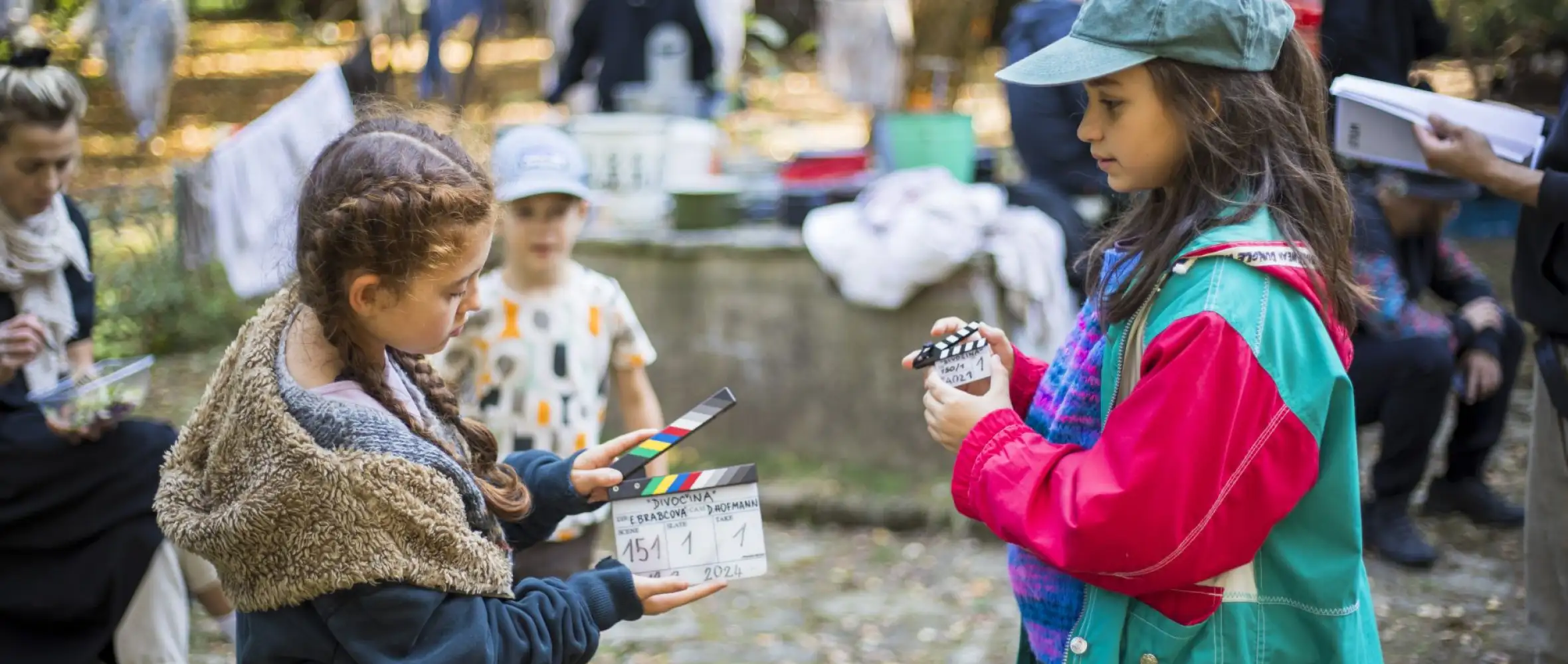
Principal photography on the film took place in September and October 2024 across locations in the Czech Republic. Postproduction is slated to continue through spring 2025, with producer Jakub Rálek anticipating the film’s first version by January 2025 and a final version by March 2025. Backwoods is a Czech-Slovak-Hungarian coproduction, with BFILM.cz producing and Slovakia’s Grimaldi Production, Hungary’s Filmfabriq, and Czech Television as coproduction partners. The Czech Audiovisual Fund, Creative Europe MEDIA, Slovak Audiovisual Fund, and the Hungarian National Film Fund supported the film. A local premiere is tentatively scheduled for autumn 2025, and negotiations with an international sales agent are underway.
As Backwoods progresses through postproduction, Rálek is confident in its global appeal, stating, “This is a story that speaks to everyone. It’s about survival: emotional, physical, and environmental. It’s about finding a way forward in the face of chaos.”