01 April 2017
To Be Human is a Never-Ending Struggle
Interview with Bohdan Sláma
To Be Human is a Never-Ending Struggle
Interview with Bohdan Sláma

In his new film, Ice Mother, Bohdan Sláma, director of the psychological dramas Wild Bees and Something Like Happiness, revisits the theme of family, this time with a little more humor and hope.
Interview by Hedvika Petrželková for Czech Film Magazine / Summer 2017
Hana, the film’s heroine, is a woman in her sixties, a dedicated mother and grandmother, who finds herself exploring an unusual community — winter swimmers — setting in motion a major shift in her life. Why did you choose the community of winter swimmers as the setting for your film?
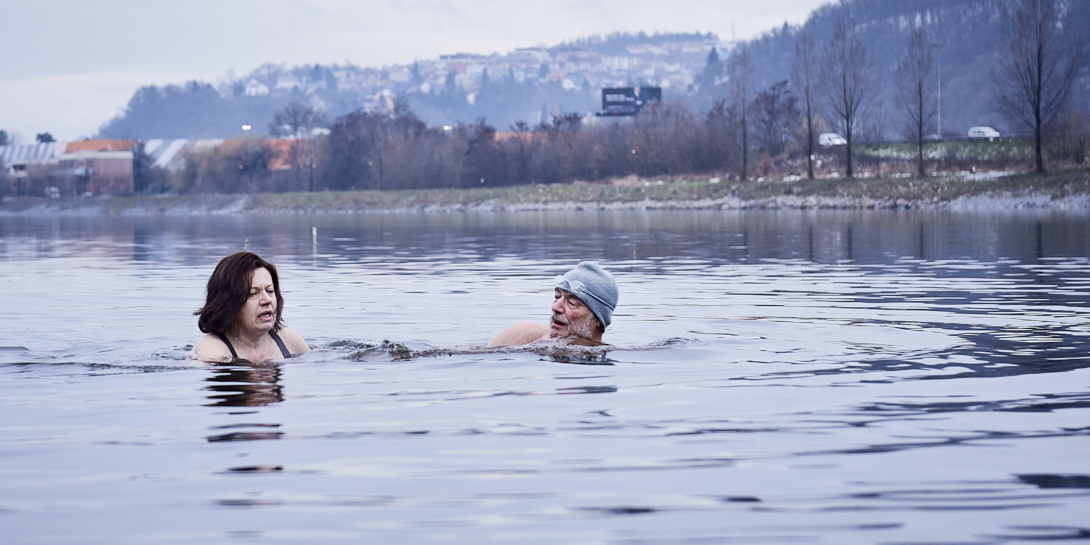
Whenever i make a movie, I like to explore a different group of people. Winter swimmers are an authentic community with their own laws, ethos, sense of humor. it also gave me access to a bunch of amazing nonactors. Plus a key factor for me is that all the rituals of our ancestors, whether Christian or pagan, are associated with cold water. Stepping into cold water has always meant exposing yourself to fear, it’s a physical challenge. Then, when you come out of the water, there’s a feeling of joy, it’s a truly amazing thing. I see it as the contemporary form of an ancient ritual.
How did your leading lady handle the challenge?
Originally, she thought we were going to use some special effects or neoprene, or do it in post-production. But none of that would work. To play the role she had to be able to do it herself. She resisted for a while, but finally, when she tried it, it turned out she was unbelievably well suited for it. She could stay in freezing cold water for twenty minutes, almost as long as the top champions.
You have a history of working not only with non-actors, but also with children — or one child in particular, who had a key role. What was that like, and how did you find Daniel Vízek?
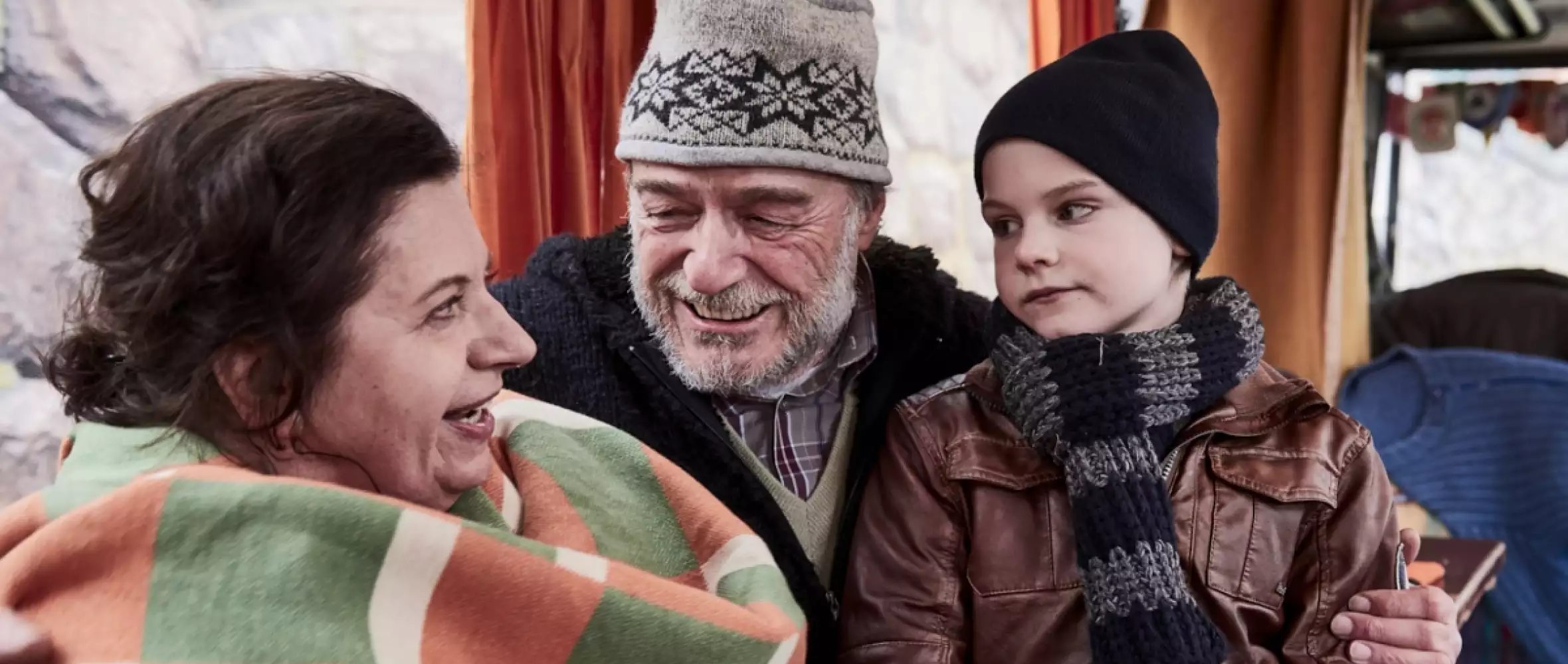
For the role of the introverted child, I knew we had to pick someone who already had it in them. We looked at some young actors, through a casting agency, but to no avail. Finally we discovered Daniel through a TV audition that was open to kids without any acting experience. We tried him out in some of the harder scenes, and he convinced us that not only could he act, but he had something in him that his character needed to have. He could grasp even the relatively complex things that go on between adults. It was wonderful working with him. And with the hen, too.
Yes, the hen also plays an important role. What was it like working with an animal actress?
Unlike Zuzana Krónerová, the hen had a body double, so she only came on set to shoot the most demanding scenes. For the rest, we just used a regular hen. She’s a big star, and normally does theatrical productions, so she’s used to it.
"I see optimism in the fact that Hana is able to change.”
I think it would be fair to say that Ice Mother, compared to your previous films, is more accessible to a wider audience. There are no extreme characters, and in general it’s got a very positive viewpoint. Was that intentional on your part, or did it just happen naturally?
I always want my movies to communicate with the audience. They may be more demanding, and they aren’t for people who just go to the movies to be entertained, but my main theme is, and always has been, families, which is relevant to everyone. There’s hardly anyone who doesn’t have the experience of functioning in a family community, so in that sense this film is no different from my previous ones. I definitely didn’t decide in advance that i was going to make this movie nicer or less extreme.
There’s also a fair amount of hope — again, unlike your previous films.
I'm glad you see it that way. I hink it’s good that Hana finds a way to redefine her place in life — she frees herself from the role that she’s assigned to herself all her life. I see optimism in the fact that she’s able to change.
So would you agree that people can fight to better their lives even once they get older?
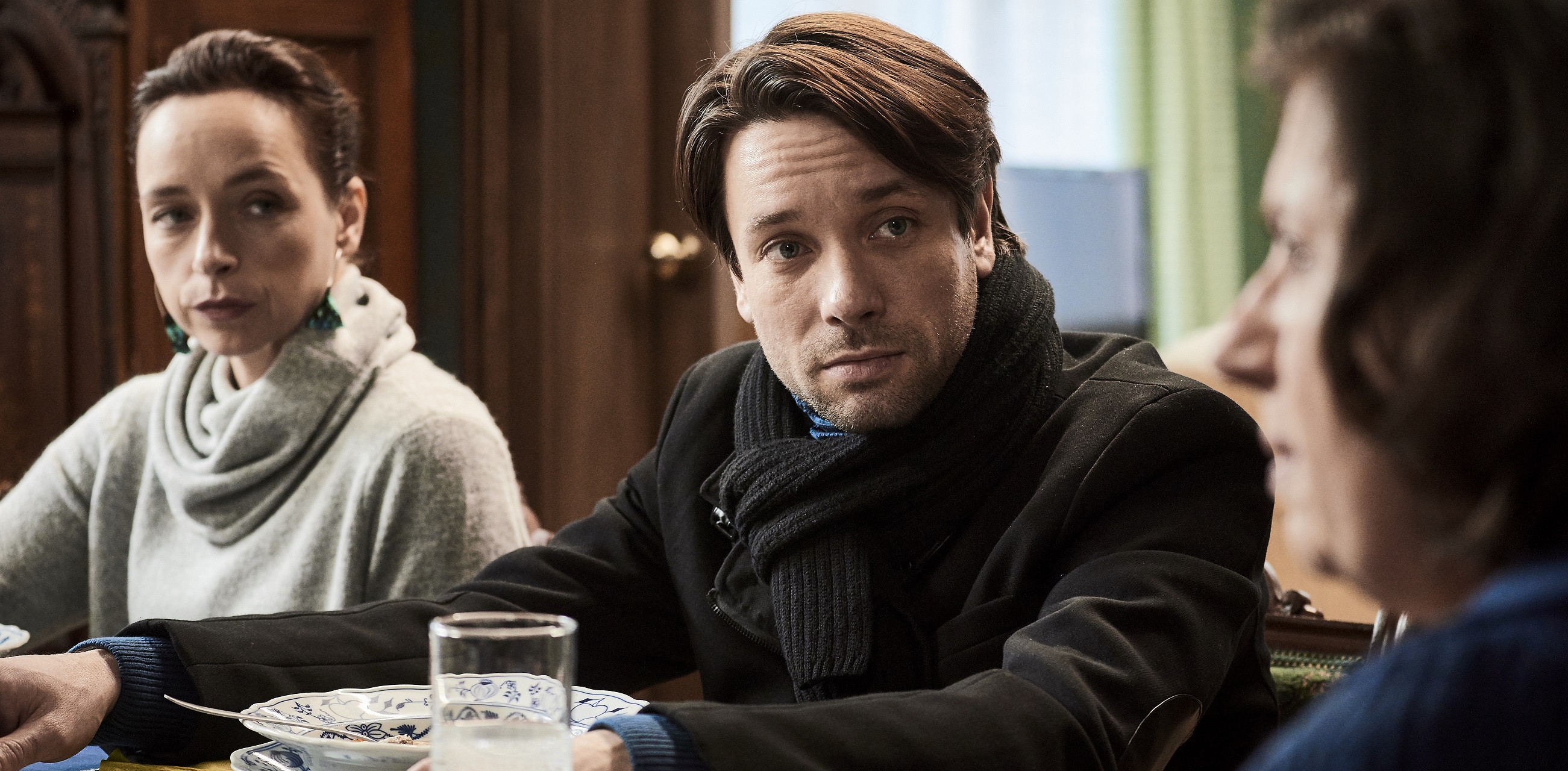
I fundamentally believe that to be human is a never-ending struggle with the bad that every human being has within them, and a constant effort to uplift the good. I like people who have the ability to keep on transforming themselves. It’s about continually learning, because people who feel like nothing about them is ever going to change, who live trapped in stereotyped notions of themselves, people like that aren’t interesting to me as characters from the perspective of telling a story on film.
What made you choose a woman for the lead role?
Motherhood here in this country tends to be presented as the mom who sacrifices herself for the sake of the family and carries around her children as a burden all her life, so I was interested in exploring a character who no one expects anything from. I naturally identify with the victim in any story, but what I like even more is when a character can escape from that role. Plus Zuzana has an ability that’s rare in women of her age: She can play the clown.
"She could stay in freezing cold water for twenty minutes,
almost as long as the top champions.”
Who do you use as your first viewer, or the first reader of your scripts?
The first people I give my script to read are my wife and my producers. They’re the first ones I talk it over with. After that, I try to give it to different people I respect — my co-workers, even my students at school — to get feedback. The genesis of this script was relatively long. From the original idea to the final version took two years of work and eight drafts. It was exhausting, but I had a great script advisor in Martin Daniel, the son of Frank Daniel, who works in both US and European film, so his comments were extremely valuable.
What’s your opinion about the current state of Czech film?
We still don’t have any works that would bowl people over, either in Europe or worldwide. The main weakness of Czech film is it’s made with the mindset that it’s only for a Czech audience. There are a lot of films being made about periods of history that haven’t been dealt with before, or addressing historical taboos, but these things aren’t interesting to the rest of the world. Meanwhile we also don’t have the kind of social traumas that can serve as a source of powerful stories just by describing what happened, like in Romania, with films like The Death of Mr. Lazarescu. Plus, even when we do find powerful themes, we don’t manage to convey them in a comprehensible way. When it comes to this, our documentaries are much more interesting. The ideal for me is what you see in every Miloš Forman’s film: all of his movies deal with extremely complex, deep subjects that are uncomfortable, but he knows how to present them in a way that appeals to a wider audience.
You’re working on a major new project now: Švejk, based on the famous Jaroslav Hašek’s novel from the 1920s. How is that going?
We’re doing run-throughs with the actors now, which will also let me see if the material is viable material and the characters are interesting, or whether i’m just fooling myself. Hašek’s Švejk is a fascinating work of literature, but adapting it for the screen is extremely challenging.
How do you picture Švejk himself?
There are so many different angles you can take to look at Švejk. From a fool and a monster to the incarnation of Hašek’s tremendous wit and wisdom. I’m trying to see him as a realistic figure, a man who deals with the horrors of the world around him through humor, which is oftentimes extremely dark. That’s his way of combating it, and it’s timeless, which is what makes the character real.
Bohdan Sláma (b. 1967) debuted with Wild Bees (2001), which earned many honors, including a Tiger Award at the international Film Festival Rotterdam. His second film, Something like Happiness (2005), won seven Czech lions and the top prize at the San Sebastian film festival. His other works, The Country Teacher (2008) and Four Suns (2012), have screened in film festivals around the world. Having completed his last project, Ice Mother (2017), he is currently working on Švejk, a film inspired by the classic 1920s novel by Jaroslav Hašek The Good Soldier Švejk.