

22 May 2017
György Kristóf about his movie Out
György Kristóf about his movie Out

Out, a road movie by Slovak first-time director György Kristóf, a student at Prague’s FAMU, will compete in Un Certain Regard at the 70th running of Cannes.
Article by Hedvika Petrželková, Markéta Šantrochová for Czech Film Magazine / Summer 2017
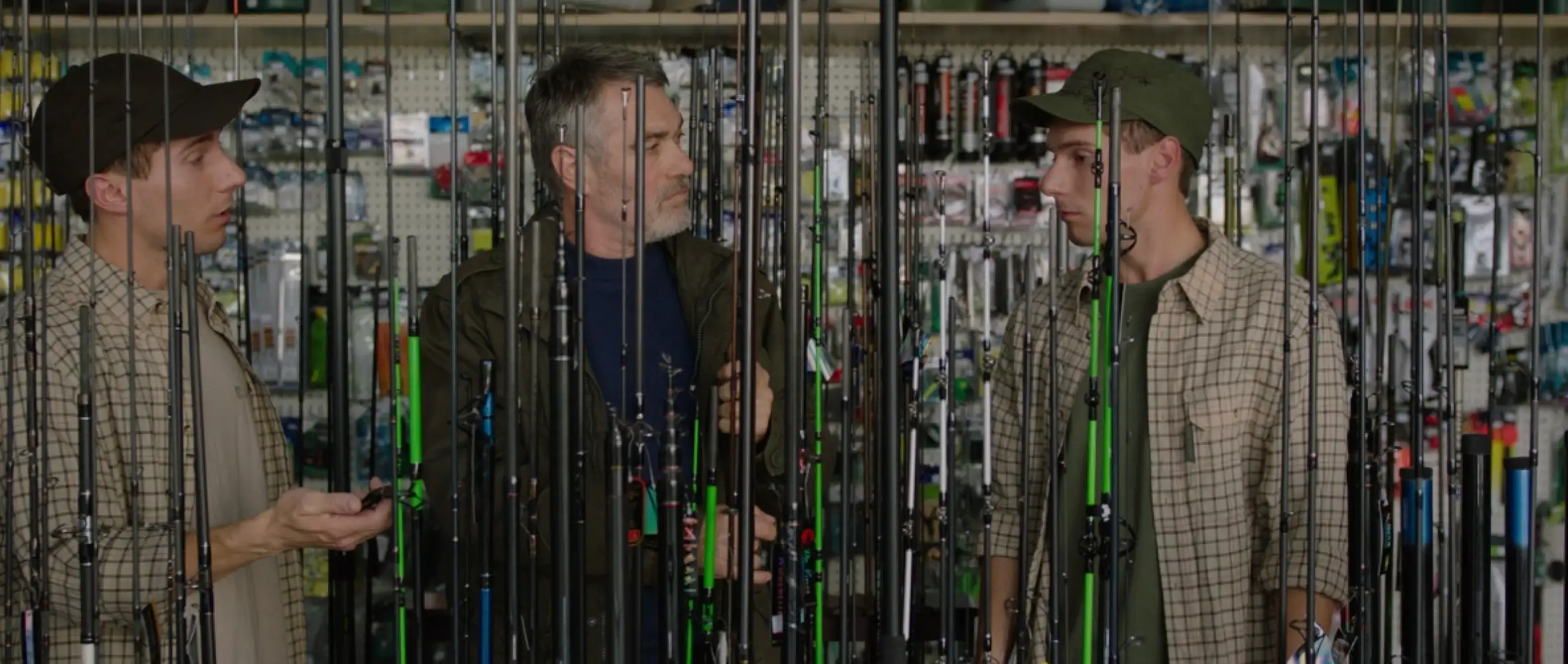
Written and directed by Kristóf, Out tells the story of Ágoston, a 50-year-old family man who sets out on a journey through Eastern Europe in desperate search of a job and with the hope of fulfilling his dream: to catch a big fish. As he finds himself in the Baltic, alone and empty-handed, his journey takes him ever deeper into a sea of bizarre events and encounters.
Finding Your Place in the World
In the early part of the film, we see the hero in the intimate setting of his home, but then, gradually, we move to increasingly empty and desolate spaces, devoid of humanity. Asked whether his aim was to portray the main character as a modern pilgrim, gaining distance yet losing himself in the process, the director replies: “That is the question of the film: whether he loses himself or not? Maybe it’s his way of finding himself and his place in the world. But to do that, he has to sacrifice, and loses a lot. Maybe he’ll never find it. It’s up to the audience. Opinions will probably vary, and that’s a good thing.”
“The problems of post-socialist society have fundamentally influenced the lives of our parents. They’ve also had a profound impact on my own generation. We need to talk about that — about the slow degradation we feel,” says Kristóf, a native of Košice in eastern Slovakia. “It was clear to me the main character had to go abroad. But at first, for quite a while, what I was most concerned with was the hero’s age: should he be from my own generation, or older? In the end, I chose the latter, for both dramaturgical and personal reasons. I lived in Riga for some time while my wife was finishing film school in Tallinn. My previous short movie won first prize in several cinematography festivals, and a lot of times the prize was a 35mm film. Originally, I thought I might use it to make a short film, but I couldn’t figure out a topic that fit, so eventually I decided to go with a feature film. That’s how Out was born,” explains the director.
“Western Europe is different now, but these countries have their own specifics, their own humor, and in a sense they’re very similar to countries in Central Europe, since we’re all members of the former Soviet bloc. There’s a large Russian minority in the Baltic countries, almost everyone there speaks Russian, and that helped me and that helped me, from a compositional point of view.”
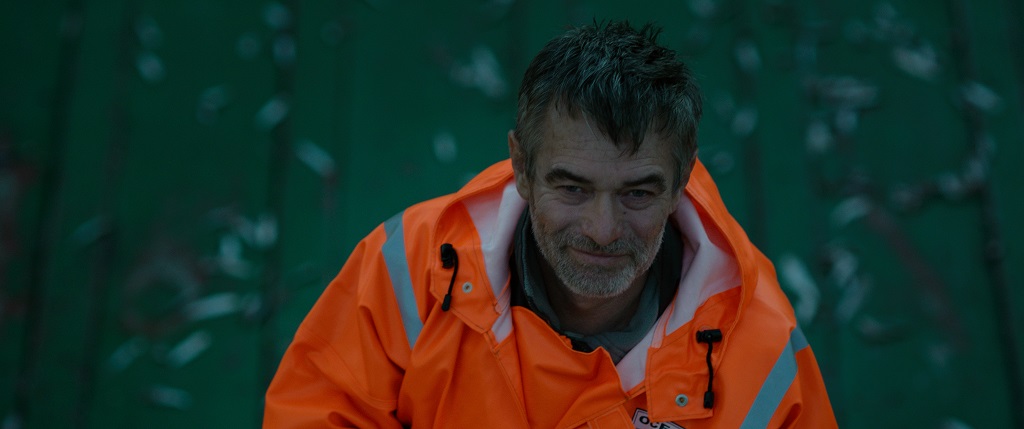
Kristóf’s film moves through various landscapes: urban landscapes, open spaces by the sea, but also industrial zones with huge ships. “We hope it made the movie richer. We made a point of showing a lot of different exteriors and interiors, since we stay with one character the whole time and perceive the story through him and his inner story. That’s why we avoided locations that were too specific to any one country or city and tried to keep it all in a universal, undefined space,” he says. Also, as the story progresses, the camera gradually moves away from the main character. At first it’s close up, but then it pulls back more and more, with increasing use of long shots. “We had planned to apply this concept much more than we did, but it wasn’t possible, given the circumstances. But it doesn’t matter. Maybe there would be no point. The important thing was for the viewer to get in touch with Ágoston at the beginning, to develop a close relationship with him. Then, as the world around him starts to change, the way you perceive him from outside starts to change with it, and that’s what we wanted to capture,” Kristóf says.
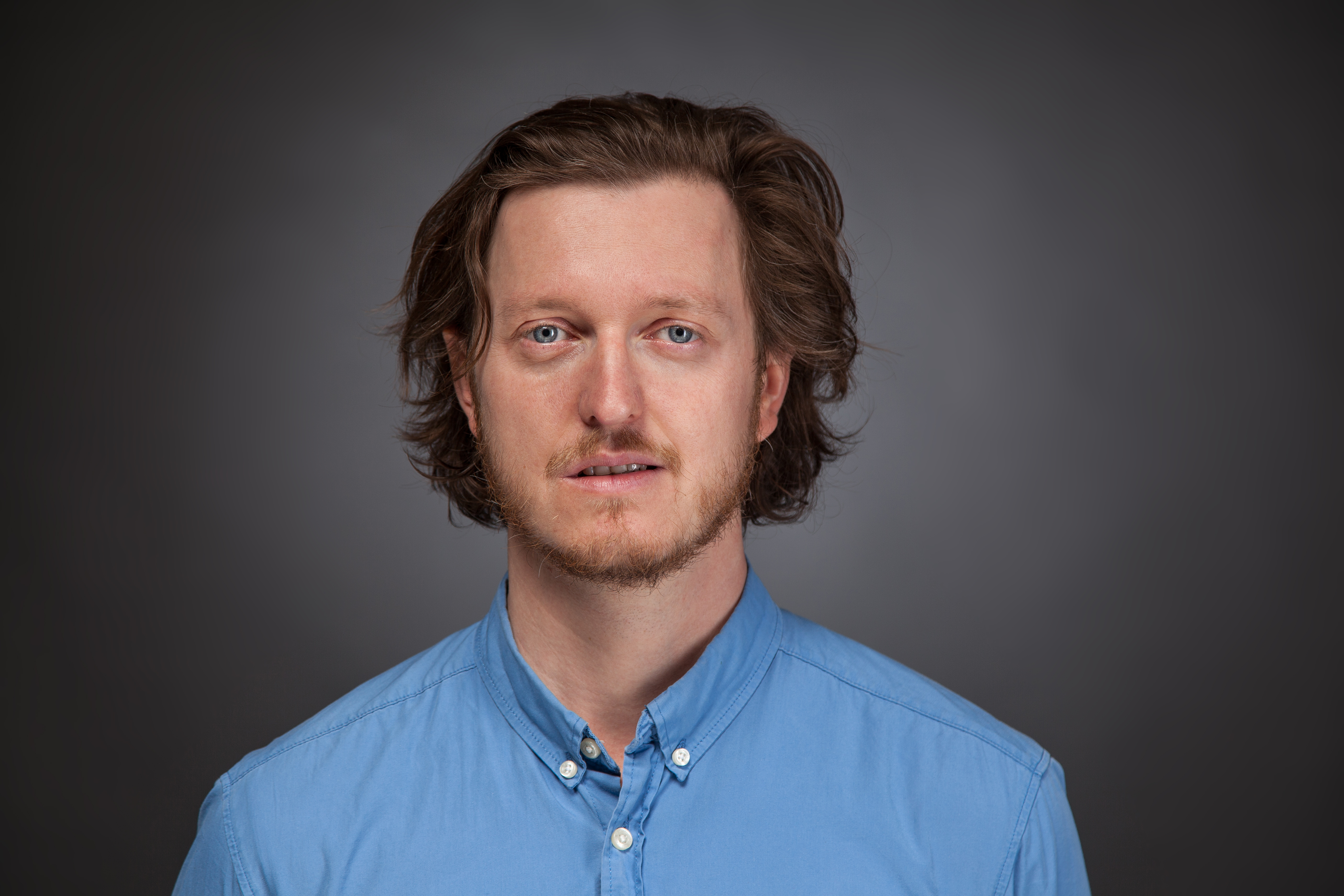 Director György Kristóf was born in 1982 in Košice, studied philosophy at Miskolc University in Hungary, and was accepted to the Directing Department at Prague’s FAMU in 2008. He worked as an assistant director to Ildikó Enyedi and Daniel Young. In 2015 he was the first person from the former Czechoslovakia selected for the prestigious Cinéfondation’s Atelier at Cannes. “Taking part in L’Atelier helped me most by being able afterwards to reach out for the production grants we had not been able to acquire before. Thanks to that, we were able to take the first step toward shooting the film. We’d taken part in other coproduction markets before, but we had a different status here. We could meet with whoever we wanted, which isn’t always the case at other forums. Here, instead of our having to ask potential partners, they came to us. Plus they had already read the script and came in with a specific offer. I kept in touch with Georges Goldenstern, the director of Cinéfondation, so he knew what was going on with the film, and I asked him for advice several times.”
And what’s up next for the director? “Right after Cannes, I hope to enter the preparatory phase for this project I have in mind. It’s a sci-fi dance thriller that’s a metaphor for the political situation after the 1989 revolution. Aside from that, I’m developing a new project that’s the exact opposite of Out. It’s about people who prefer to stay at home, and takes place on the border of three states — Slovakia, Hungary and Ukraine — around the time we joined the Schengen zone. Also, I have an American idea in my head, which takes place in 1977 New York, back when the city was still chaotic and free, and clubs were just getting big. DJs played music on sound systems powered by tapping into streetlamps, and one time there was a power shortage for almost the whole city that lasted more than a day.”
- Out was shot as a Slovak-Hungarian-Czech co-production, with Jiří Konečný (endorfilm) on the Czech side, co-produced by FAMU. The film was supported by the Slovak Audiovisual Fund, State Cinematography Fund Czech Republic and the Hungarian National Film Fund.
- Out was produced by Marek Urban / sentimentalfilm (SK), Ferenc Pusztai / KMH Film Productions (HU) and Jiří Konečný / endorfilm (CZ). The film was shot by well-known Hungarian cinematographer Gergely Pohárnok (Taxidermia), and stars Sándor Terhes, Éva Bandor, Judit Bárdos and Ieva Norvele.
- A number of Czech film professionals and companies took part: the Czech producer is Jiří Konečný, who has produced several successful films, including the co-productions Little Harbour, Koza, Family Film, Aferim! and A Night Too Young. The film was edited by Adam Brothánek, post-production was handled by UPP Studios, and the sound engineer was Jan Richtr. “I’m glad my first attempt at making a movie was one that can compete at the highest international level. From the development of the script to all the post-production work, the Czech contribution to the film was crucial, and I really appreciate it,” says Kristóf.
- Oficial website

Related news

Related people
Jiří Konečný
Producer,
Film Contact
Czech Republic