
27 February 2017
Filthy: Violence Harms not Only the Body...
...but also the Soul and Society
Filthy: Violence Harms not Only the Body...
...but also the Soul and Society

The theme of alienation is popping up increasingly in debut works by Czech and Slovak directors. Whatever subject the young filmmakers tackle in their films, their protagonists are often uprooted individuals, struggling with a lack of understanding from the surrounding world.
Article by Tomáš Stejskal for Czech Film Magazine / Spring 2017
Director Tereza Nvotová and screenwriter Barbora Námerová, in the Czech-Slovak coproduction Filthy, focus on sexual abuse, but at the same time the film uncovers the feelings of young people in general, their attitude toward the world and, metaphorically, the state of society as a whole.
“People in Slovakia say that most Slovak films are depressing, and that’s why they don’t draw an audience as big as commercial blockbusters. But what people don’t realize,” says Nvotová, “is that every film reflects a part of reality, so the reality of Slovakia must be pretty depressing.”
Filthy is Nvotová’s FAMU graduation film, produced by Miloš Lochman, of Moloko Film, and Peter Badač, of BFILM. Besides them and FAMU, support for the film, with its budget of 365,000 CZK, came from the Czech Republic’s State Cinematography Fund and the Slovak Audiovisual Fund.
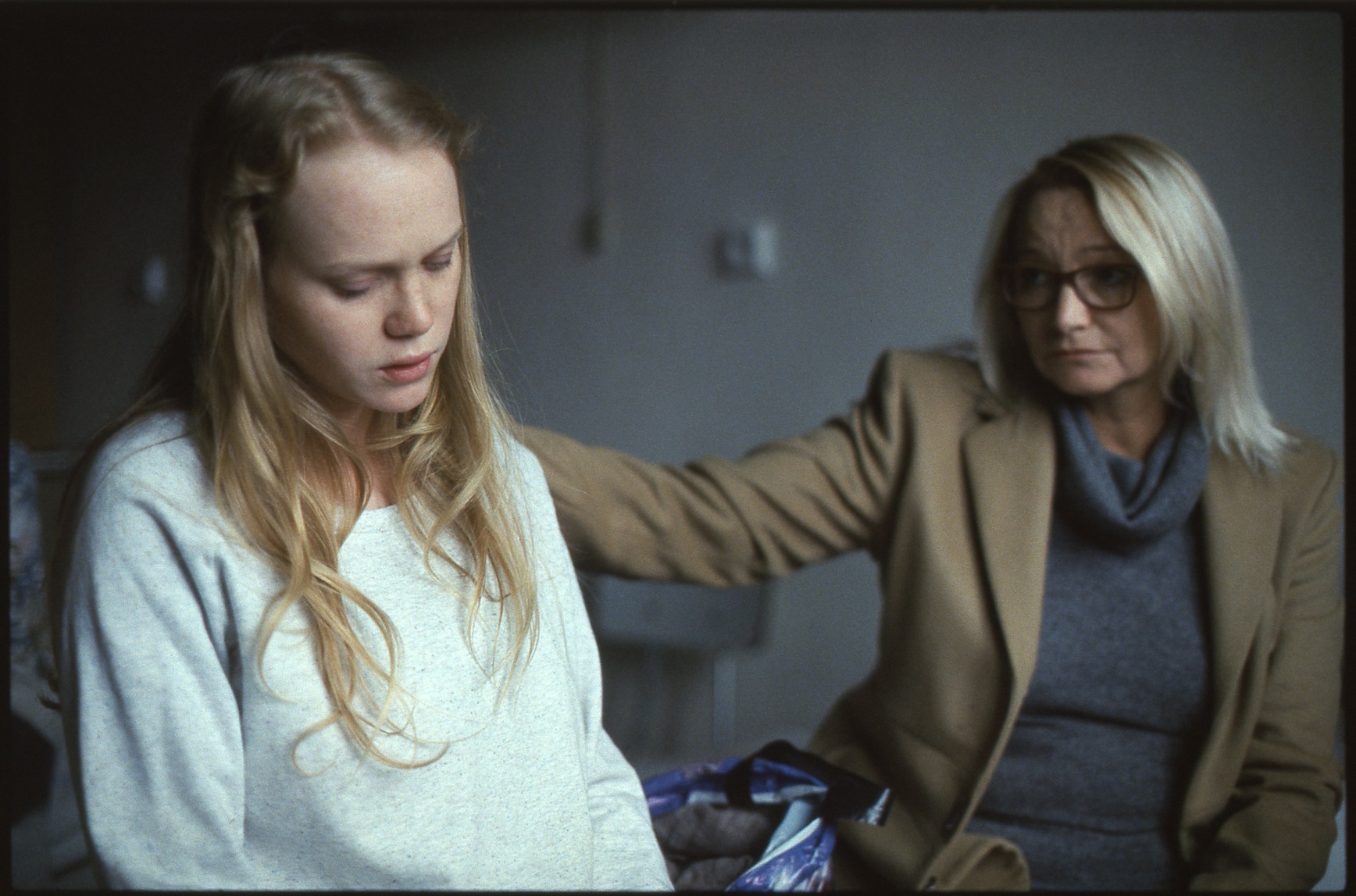
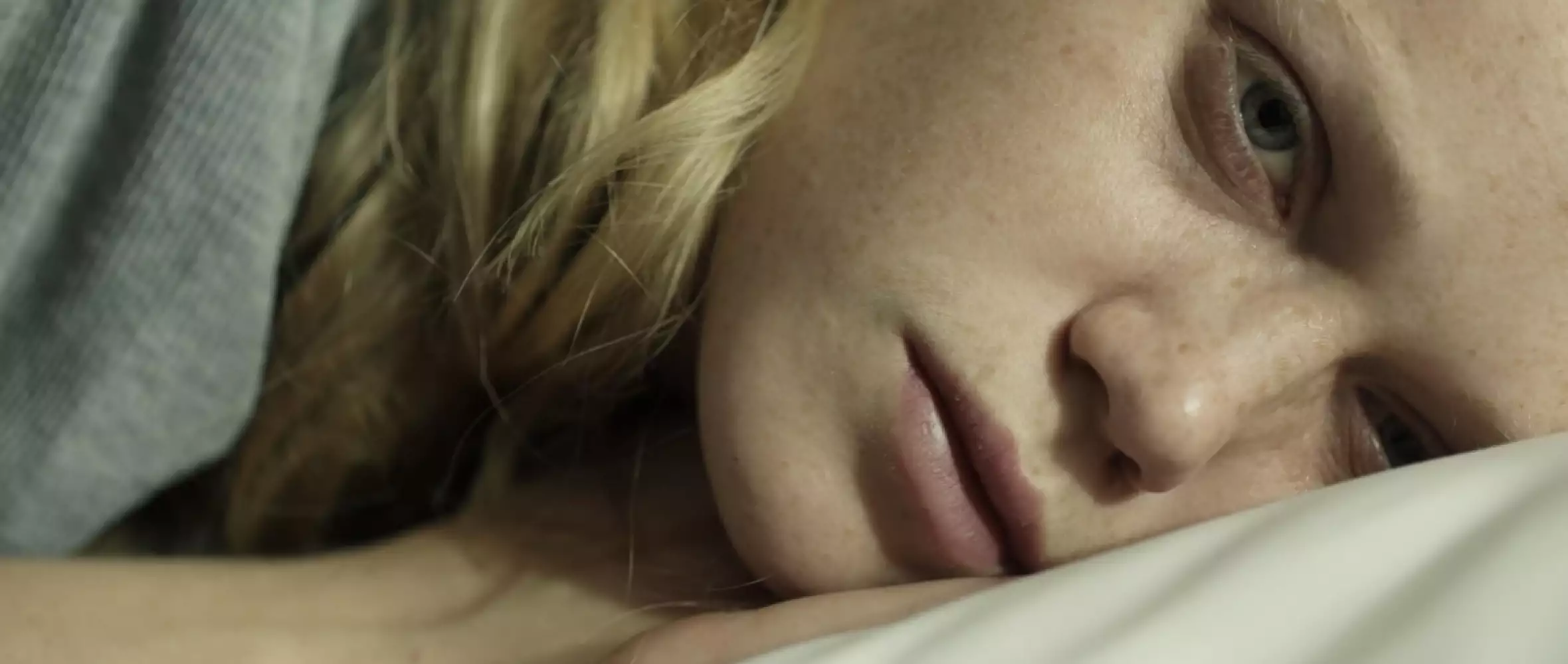
The film tells the story of 17-year-old Lena, raped by a man she had trusted: Robo, her favorite teacher in school. To complicate matters, Lena and her friend both secretly have a crush on him, and Lena’s entire family admires him. Like most survivors of sexual abuse, Lena decides to keep the gnawing truth to herself.
“Stories like the one in our film are happening all around us. Filthy is a scream at a society that keeps ignoring the screams of individuals,” says Nvotová. The remarkable thing about her film, though, is it isn’t noisy at all. It takes on this painful subject matter — which many still consider taboo, even in today’s society, making it intimidating or shameful for women to discuss — with ease and silence, avoiding overacting, relying instead on imagery and the actors’ strong performances.
At one point, Lena enters a mental hospital whose adolescent patients actually have experience with other institutions: Nvotová decided to cast kids from children’s homes and detention centers. “I didn’t have to explain too much to them how these places work. They brought a huge dose of realism to the scenes,” says the director, talking about the experience of mixing professional and nonprofessional actors. “We were shooting inside the biggest mental hospital in Slovakia, so it wasn’t hard to start believing we were actually all locked up in there.”
In the film, the children’s psychiatric hospital isn’t just a dreary place, but symbol of a dysfunctional system, where radical therapeutic methods are actually fairly common. Filthy puts the natural behavior of its young protagonists to good use. DoP Marek Dvořák gets in nice and close — for example, when the patients are running around the ping-pong table — but also often films from a distance, in cold, yet emphatic takes. Some of the scenes are even tinged with humor, like the vulgar suggestiveness of the group therapy sessions, or a nighttime conversation between Lena and her roommate about the most embarrassing way to commit suicide.
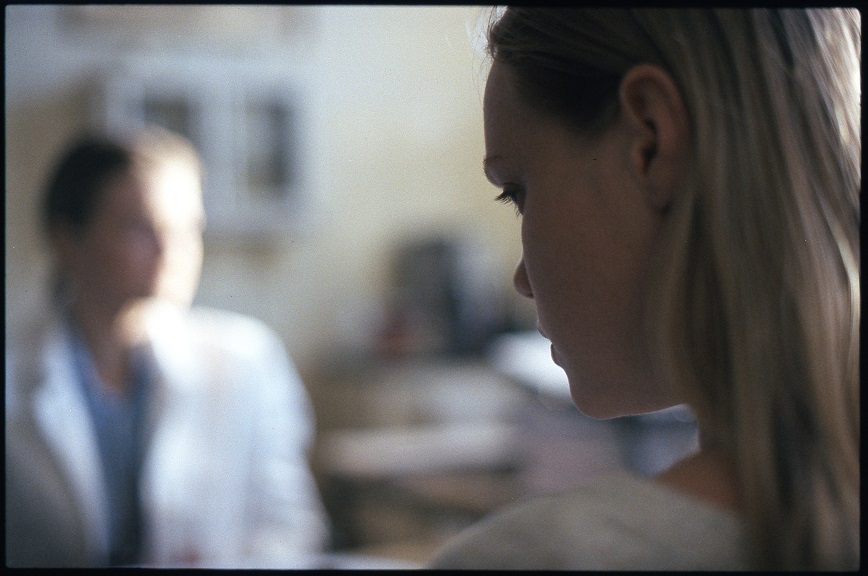
Lena is torn from her world in a way similar to the main character in last year’s I, Olga Hepnarova, or David, the protagonist of Jan Těšitel’s directorial debut of the same name, from two years ago. None of the three suffers froma clearly diagnosable mental illness. Yet all of them — Lena, Olga the mass murderer, David the runaway — stand out from the rest of the community because of their introversion and quirky behavior, and, each for their own reasons, either can’t or doesn’t want to fit in.
It’s also noteworthy that characters like these have introduced a very physical type of acting to Czech and Slovak cinema. Patrik Holubář, the actor who played David in Těšitel’s film, also plays Lena’s physically disabled brother in Filthy, and the theme of the siblings’ complicated relationship is intertwined throughout the film. Until now, Nvotová had mostly made documentaries. Mečiar, her portrait of former Slovak prime minister Vladimír Mečiar, now retired and living in the peaceful atmosphere of his villa, in fact offers a portrait of the country as a whole. Images of the pensioner barbecuing sausages, drinking wine, and chatting are framed by scenes of two journalists watching the footage and providing a much less cheerful sociopolitical commentary.
Nvotová’s feature debut follows Eva Nová and Koza, the first feature outings by her older Slovak colleagues Marko Škop and Ivan Ostrochovský, both of whom also focused on documentaries in the past. Both of their main characters, too — an ex-boxer nicknamed “Goat” and a former actress battling alcoholism — face a similar social exclusion. What all three films have in common is that they’re built on the language of images and physicality. Still, they’re mainly concerned with the soul.
“The world of survivors of sexual abuse is, for the most part, inaccessible to those around them,” says Nvotová. “I wanted to give the audience a chance to penetrate their souls and minds. I didn’t want to let them leave the theater with nothing but some shocking statistics about the number of rapes.”
Through her silence, Lena manages to communicate this to viewers. What she offers even more than her experience of this inexcusable act, still often trivialized by society, is a view of a world in which, in a single moment, love can turn into hate — but hate can also turn into love, and the old maxim that “appearances can be deceiving” can be true in more ways than one. Filthy is a quiet film, telling us there is no way to heal the scars on a soul if an individual and society remain quiet.