10 August 2026
A Prize-Winning Czech presence at Toronto IFF 2026
A Prize-Winning Czech presence at Toronto IFF 2026

The 51st Toronto International Film Festival, running September 10–20, will see the Czech Republic represented by Pegah Ahangarani’s award-winning political essay Rehearsals for a Revolution in the Centrepiece showcase, Anna Mantzaris’s stop-motion Please in the Short Cuts program, and FAMU graduate Viktorie Štěpánová receiving a Student Oscar for Volklore at a ceremony held during the festival.
by Martin Kudláč for CZECH FILM / Fall 2026
Over the past decade, Toronto has become a steady North American platform for Czech films. Václav Marhoul’s The Painted Bird, Michal Blaško’s Victim, and acclaimed shorts by Daria Kashcheeva and Diana Cam Van Nguyen served to set the pattern, continued most recently by Peter Kerekes’s Wishing on a Star, in 2024, and Agnieszka Holland’s Kafka portrait Franz, last year.
Anchoring this year’s selection is the Czech-Spanish documentary Rehearsals for a Revolution, by Iranian actress and filmmaker Pegah Ahangarani. Toronto will host the film’s Canadian premiere in its Centrepiece program, following the world premiere in Cannes’s Special Screenings and a presentation in Karlovy Vary’s Horizons section.
The film opens with a reflection on the word yad, a Farsi term with no direct English equivalent. As Ahangarani explains, in Farsi remembering implies an active process, and this idea becomes the organizing principle of the film. Structured in five chapters around relatives, friends, and mentors, Rehearsals for a Revolution traces more than four decades of Iranian history through people whose lives were ruptured by war, political repression, imprisonment, and exile.
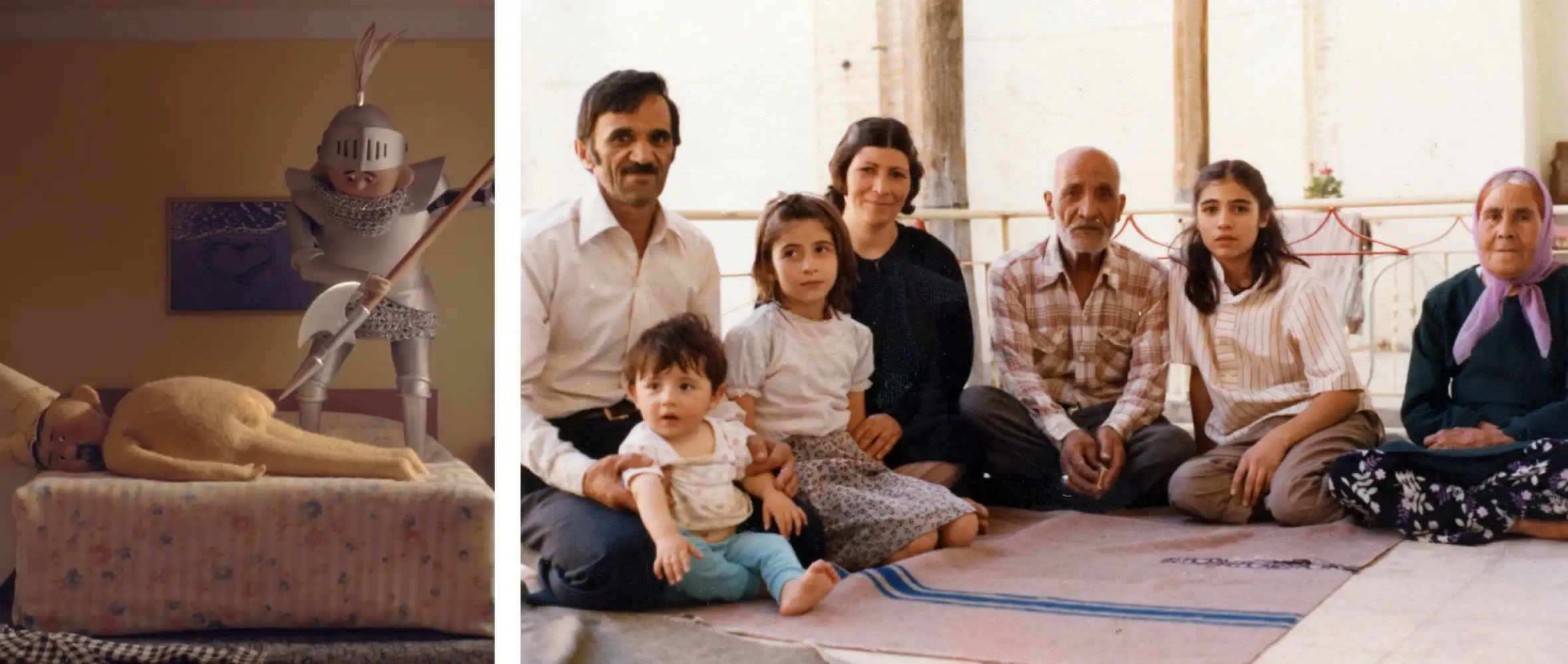
Each period is articulated through the technology used to record it. Super 8 home movies, newspapers, handheld cameras, street-protest recordings, YouTube footage, and animation connect the aftermath of the 1979 revolution, the Iran-Iraq War, the 1999 student protests, and the 2009 Green Movement with Ahangarani’s present-day life in London. When images are missing, as in the third chapter, their absence becomes part of the narrative, with newspapers and memories of people queuing at newsstands standing in for events that were not recorded.
Archival material here is not used merely to illustrate history. At several points in the film, the footage itself determined how the narrative developed. For the chapter on the 2009 protests, the filmmakers combined publicly available online material with personal archives obtained through an intermediary. The result is less a chronological survey than an essay on how images preserve political experience when official histories are suppressed or rewritten.
A formal shift occurs in the fourth chapter, when Ahangarani can no longer remain solely an off-screen narrator. Having filmed the demonstrations herself, she pauses on her own image and enters the history that, up until then, she has been simply reconstructing. The transition from observer to participant carries into the final chapter, which Ahangarani assembled from exile as events in Iran continued to unfold. At one point, with no news coming out of Iran, Ahangarani considered leaving the editing timeline blank. Instead, the contradiction between her new family life in England and the crisis at home becomes part of the movie’s unresolved form.
Ahangarani began to act when she was 7 and now, at age 42, has appeared in over 40 films. Alongside this, she has developed a documentary career grounded in testimony, recovered images, and personal history. Her shorts I Am Trying to Remember, My Father, and As I Lay Dying traveled the festival circuit, including Hot Docs, Busan, IDFA, and Melbourne, and she also made the documentaries Child Soldier and Taraneh for the BBC. Expanding on this earlier work, Rehearsals for a Revolution, Ahangarani’s first feature documentary, is a collective portrait with private memory acting as a record of public resistance. Jonas Mekas, whose free-form cinema of displacement and self-narration is referenced directly in the film, was a key influence on its construction.
Rehearsals for a Revolution is produced by Prague-based Europe Media Nest, founded by Iranian producer Kaveh Farnam as a bridge between Iranian filmmakers and the European production system. Farnam produced the film with Adrià Monés of Spain’s Fasten Films, continuing a line of politically engaged Iranian work that includes Ahangarani’s I Am Trying to Remember and My Father, as well as Mohammad Rasoulof’s A Man of Integrity, winner of the Un Certain Regard prize at Cannes in 2017.
Rehearsals for a Revolution won the L’Œil d’or for best documentary at Cannes. International sales are handled by The Party Film Sales, while Sony Pictures Classics subsequently acquired rights for North and Latin America and several further territories, making Toronto an important step in its North American launch.
Toronto’s second Czech selection comes in the Short Cuts program. Anna Mantzaris’s nine-minute Please, here in its North American premiere, is the Swedish animator’s first original short since 2018, after a period of high-profile commissioned work, including Fuzzy Feelings, her Emmy-winning holiday ad for Apple. Mantzaris began developing Please during the pandemic lockdowns in London, when people’s frequent use of video calls made them increasingly conscious of their own image while physical isolation intensified their need for connection.
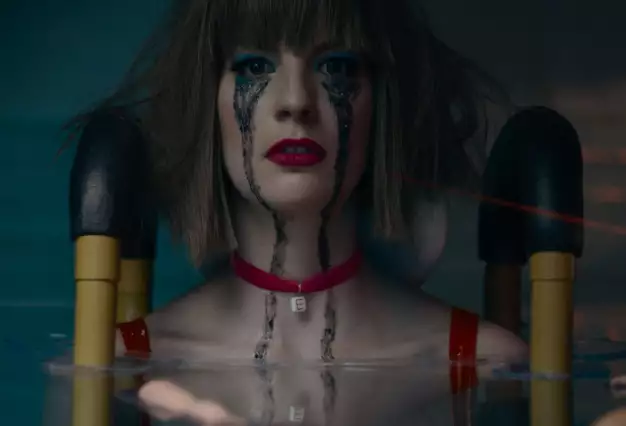
In Please, that contradiction serves as starting point for a darkly comic response to contemporary self-improvement culture. Rather than correcting feelings of embarrassment or desperation, Mantzaris allows her characters to act them out through a series of overlapping urban vignettes. Soft felt puppets cry in supermarkets, suffer through failed dates, and search for belonging as the world around them slides from everyday awkwardness toward anarchy. Stellan Skarsgård voices Winston, a lonely executive whose imposter syndrome leads him to join an unlikely religious community.
Please had its world premiere at Animafest Zagreb, where it received the Audience Award for Best Short Film, then went on to win the Jean-Luc Xiberras Award for a First Film at Annecy. Supported by the Czech Audiovisual Fund and coproduced on the Czech side by Radim Procházka of Kuli Film, the five-country production is represented internationally by Miyu Distribution.
Finally, this year’s TIFF also provides the stage for another Czech milestone. On September 14, the 53rd Student Academy Awards will be presented for the first time in Toronto. Among the 12 winning films is Volklore, a 16-minute experimental video essay by Viktorie Štěpánová, selected in the Alternative/Experimental category.
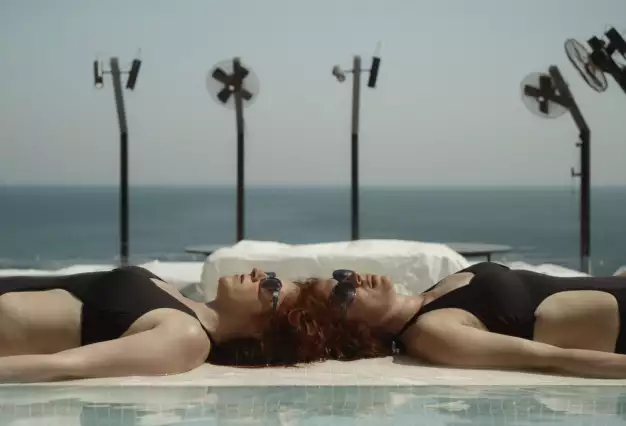
Produced by FAMU’s Centre for Audiovisual Studies as Štěpánová’s graduation film and represented internationally by Prague-based CINEFILA, Volklore had its world premiere in Karlovy Vary’s Imagina section. The story follows the fictional YouTuber Vivi through the course of a calendar year, with Czech seasonal customs restaged as fashion drops, branded experiences, and viral content. Simulated chats, advertisements, social feeds, and an online shop form a digital ecosystem in which tradition is not simply preserved or lost, but repackaged for consumption.
The concept grows directly out of Štěpánová’s personal experience. Born in Brno and raised in Vranov u Brna, she encountered folk dance and regional costumes at an early age. Later, after moving to Prague, she began to question what a kroj—a folk costume—might mean without any attachment to a geographically fixed community. Her answer is an autoethnographic “urban costume,” assembled from second-hand and sportswear materials, and a film aligning the folk calendar with the fashion industry’s cycles.
Volklore is the first Czech work to win in the Student Academy Awards’ Alternative/Experimental category and the fifth Czech Student Oscar winner overall. It follows Jan Svěrák’s Oil Gobblers in 1989, Marie Dvořáková’s Who’s Who in Mycology in 2017, Daria Kashcheeva’s Daughter in 2019, and Pavel Sýkora and Viktor Horák’s The Compatriot in 2024. The 2026 competition drew 2,972 entries from 894 colleges and universities worldwide. All winning films are eligible for consideration at the 99th Academy Awards.